
Most people selling a house in the St. Louis area find out about the occupancy inspection the hard way. The house is under contract, the closing is scheduled, and then a municipal inspector walks through with a clipboard and leaves a list behind.
Handrails. GFCI outlets. A furnace that needs servicing. A deck that was never permitted. None of it stops you from living there, and all of it can stop the sale.
If that list is sitting on your kitchen counter right now, the house is not unsellable. It is unsellable the way you were planning to sell it, which is a different problem with a different answer.
What the occupancy permit actually is
The occupancy permit is a local government requirement, not a lender requirement and not a buyer requirement. It exists so that the city knows a dwelling meets a minimum property maintenance standard before someone new moves in.
In the City of St. Louis, every property sits inside a Housing Conservation District. Under that program, a Certificate of Inspection is required before a vacant unit is occupied, and before an occupied structure is sold if no certificate has been issued in the last twelve months. The city charges $120 for a standard application, and the certificate is good for twelve months. If the inspector finds violations, the owner generally has 30 days to make the repairs. You can read the requirement in full on the city’s residential occupancy page.
In St. Louis County it is not one rule, it is dozens. Municipalities set their own programs, and many of them draw on the same county inspector pool. That is where the timing problem starts.
The part that wrecks closings is the calendar
St. Louis REALTORS published guidance telling agents to order the inspection when the listing agreement is signed, not after a contract is in hand. The reason is scheduling. During the spring selling season, wait times for a county occupancy inspection have run four to six weeks.
Now add the rest of the sequence. After the initial inspection, an owner typically has 90 days to complete repairs. Then there is a re-inspection, which has to be scheduled too.
So a seller who waits until there is a signed contract can be looking at a month and a half before anybody even walks the house, then however long the repairs take, then another wait for the inspector to come back. Buyers with a rate lock and a moving truck reserved do not sit still for that.
What inspectors actually write up
The violations that show up on these reports are rarely dramatic. On St. Louis housing stock they tend to be the same handful of things over and over.
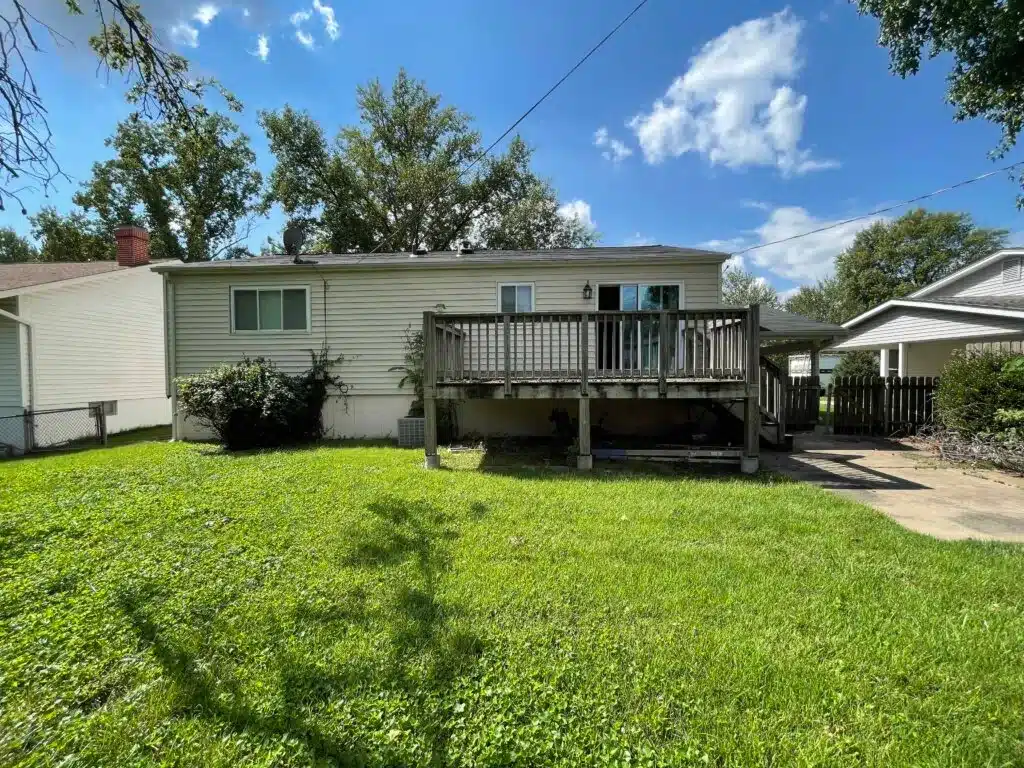
Missing or loose handrails on basement and porch stairs. Missing GFCI protection in kitchens, bathrooms and garages. Smoke and carbon monoxide detectors that are absent, expired or in the wrong location. Peeling exterior paint. Broken or painted-shut windows. A water heater without proper venting or a missing expansion tank. Furnaces that need a current service tag. Loose or missing downspouts and gutters dumping against the foundation. And, constantly, work that a previous owner did without a permit: a finished basement, an added bathroom, a deck, an enclosed porch.
Any one of those is a Saturday. All of them together, on a house that has not been updated since the 1970s, is a contractor and a real number.
Why the repair list is worse than it looks
Three things make an occupancy list more expensive than the sum of its parts.
The first is that the unpermitted work item has no clean fix. Bringing a finished basement up to current code after the fact can mean opening walls, and sometimes the honest answer is removal rather than correction.
The second is that one repair exposes another. Pull a panel cover to add a GFCI and you may find aluminum branch wiring or a Federal Pacific panel. Service a furnace that has not been touched in a decade and you may get a red tag instead of a service tag.
The third is that you are spending this money on a house you are leaving, on a deadline, while a buyer waits and loses patience. Sellers in that position rarely get good pricing from contractors.
The options when the list comes back
There are really only four, and it is worth being honest about all of them.
Do the repairs. If the list is short and the house is otherwise in good shape, this is usually the right call. Get it inspected early, fix what is on it, and sell normally.
Negotiate the repairs to the buyer. Sometimes possible, often not. Many municipalities will not issue the permit to the new occupant until the work is done, which means the buyer is taking on both the cost and the delay. Financed buyers in particular tend to walk.
Drop the price and hope. The problem is that a retail buyer getting a mortgage still needs the permit to move in. Discounting does not remove the municipal requirement.
Sell to a cash buyer who takes the house as it stands. We buy the property with the violations attached and handle the permit work on our side after closing. There is no repair list for you to fund, no re-inspection for you to schedule, and no financed buyer who might walk while you wait on an inspector. Our compare page puts the two routes side by side on cost and timing.
If the report also turned up open code enforcement, our post on selling a house with code violations in St. Louis covers that specific wrinkle.
How we handle it at Fast Lane
We have been buying houses in St. Louis City and County since 2015, which means we have read a lot of these reports. A failed occupancy inspection is not a reason we lower an offer dramatically or back out. It is a normal part of buying older St. Louis housing stock, and we price it in from the start rather than discovering it at week six.
Practically, here is what changes for you. You do not make repairs. You do not pay for the re-inspection. You do not chase contractors. We make a cash offer within 24 hours, we can close in as little as 7 days if the timing demands it, and there are no commissions, no fees and no closing costs on your side. Our how it works page walks through the whole sequence.
Because we pay cash, there is no lender, no appraisal and no financing contingency sitting between you and the closing table. That matters a lot when the problem is a municipal calendar rather than the house itself.
What to have ready when you call
The address and which municipality the house sits in, because the rules genuinely differ from one to the next. A copy of the inspection report if you have it. Whether the house is occupied or vacant. Whether you know of any work that was done without a permit. Roughly what you owe on the property.
You do not need to have fixed anything or even priced the repairs. The report by itself tells us most of what we need.
The short version
An occupancy violation list is a municipal problem, not a market verdict on your house. It can be cured, it can be sold around, and the only genuinely bad option is letting it sit while a financed buyer runs out of patience.
If you would rather hand the list to somebody else, call Fast Lane Real Estate at (314) 310-8338 or request a cash offer. We will tell you straight whether selling as-is or fixing the list first puts more money in your pocket.
This post is general information, not legal or code advice. Occupancy requirements differ by municipality and change over time. Confirm the current rules with the city or county where your property is located.